
Children of Time design diary 3: All Gods, No Masters
In the third of our Children of Time RPG design diary series, Minærva talks about the approach the game takes to narrative and gameplay authority.
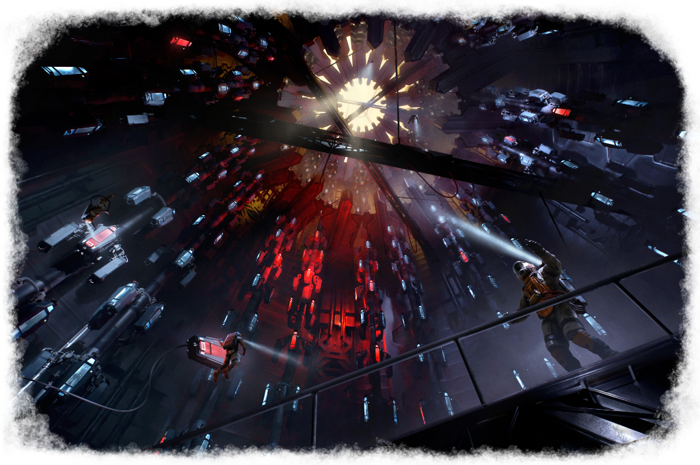
In the third of our Children of Time RPG design diary series, Minærva talks about the approach the game takes to narrative and gameplay authority.
Hey all!
Over halfway through, now. Thanks again for all your help making this collective venture the best success it can be! Crowdfunding is a collaboration between the publisher and the audience, and game design is a collaboration between the designer and each individual play group. So it’s only right, I think, that today I’ll talk about how this game is all about collaborative storytelling.
Looting the GM’s Body
Here’s the thing about game masters: they’re a great tool, but every tool has its specific uses. When you’re coming to the table to play a character and respond to a challenging situation, a GM is really useful. But with a game like this – a game of asking interesting questions and building on each other’s answers – a traditional GM role didn’t make sense. Instead, I’m doing something different.
There’s no single GM in Children of Time, but it’d be a mistake to call it GM-less. Instead, I’ve taken the GM role, disassembled it into its component pieces, and sharpened each of those pieces into a specific tool – custom-designed to help groups tell the stories this game is designed to support.
Let’s talk about those pieces. In a traditional RPG, the player taking the GM role might do any or all of these things:
- Be an expert on the game’s rules and decide how they apply to a particular situation.
- Give voice to the NPCs the characters encounter.
- Create mood, build atmosphere and control pacing.
- Describe challenging situations that prompt characters to take action.
- Manage plot and character arcs and try to make them resolve satisfyingly.
- Describe the world in ways that are consistent and compelling.
- Manage the out-of-character organization: scheduling, snacks, resolve personality conflicts, etc.
With the exception of the last one, all of those are still present in Children of Time – but they’ve found a new shape as Play Stances.
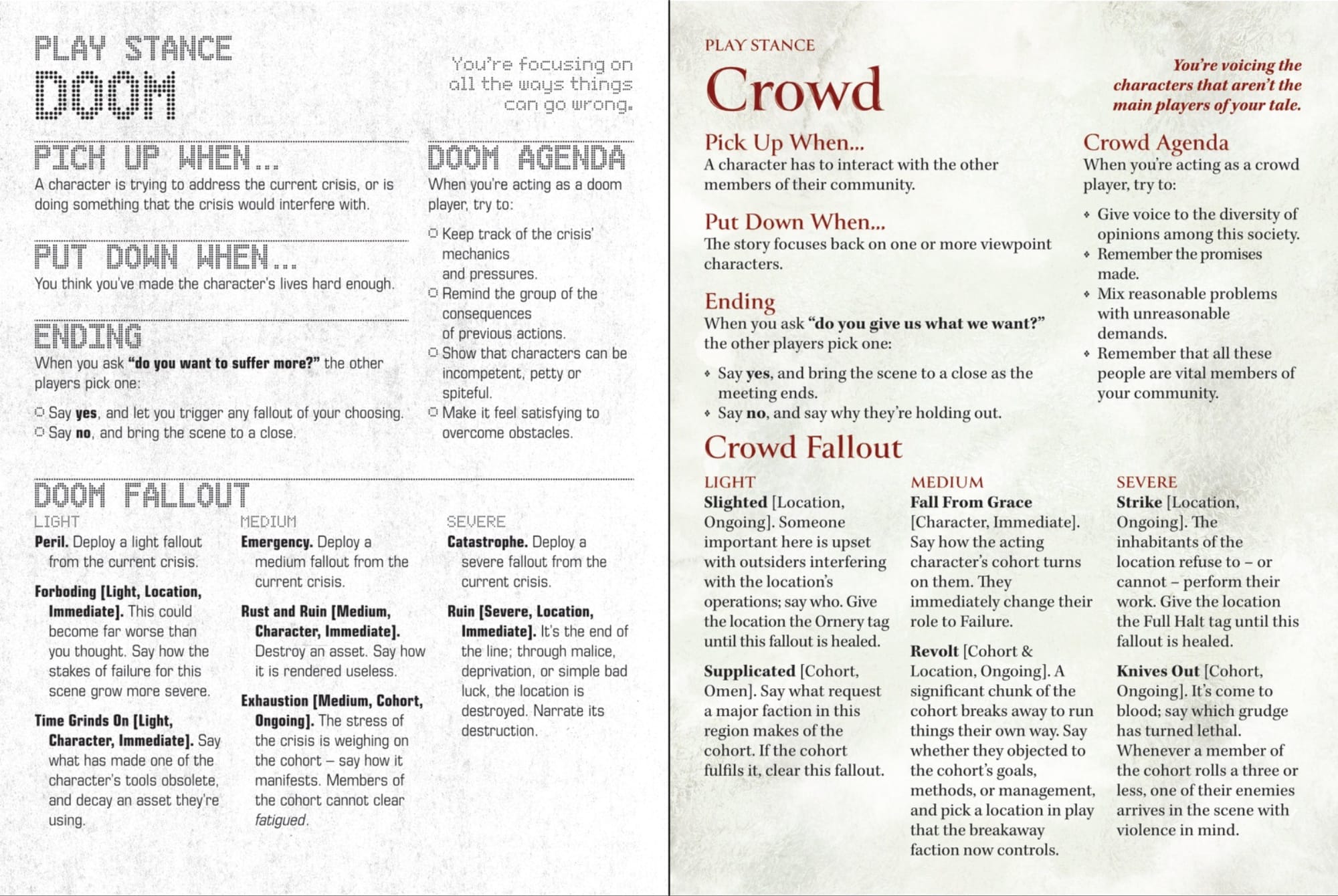
Each play stance is a tight bundle of things their holder should pay attention to, questions they can ask, and levers they can pull to alter the flow of the game. The game presents six of them:
- The Viewpoint, guiding a specific character through the world.
- The World (AKA the Ark or Planet), describing the wonders and hazards the character encounters.
- The Crowd, playing the supporting cast of the story and voicing their demands.
- The Doom, keeping things tense and dangerous.
- The Guide, facilitating play and helping the group work through the rules.
- The Historian, pushing the table towards interesting stories and lasting legacies.
Sometimes no-one will be holding a stance; sometimes multiple people will be sharing one. A tense exploration of the ark’s guts might have one Viewpoint player, with everyone else being World or Doom; one the other hand, a negotiation between two factions might have two Viewpoints, two Crowds, and one Historian.
What’s in a play stance?
Just like your characters and cohorts, play stances are held communally. Just like their main inspiration – the setting elements in Dream Askew – they each have guidance on when you pick them up, and when you put them down.
But there’s more to them than that. Each one also has:
- An agenda that you’re trying to hit for as long as you’re holding one.
- An ending move that gives you a particular way to keep the story moving.
- Fallouts you’re encouraged to push for when a character triggers one.
The last one is particularly important! The books are full of ideas for fallout that might happen when a roll goes badly for a character. Each one reverberates out into your narrative, whether they’re applied to a character, a group of people, or the world your characters are exploring. Each play stance has a particular theme to the fallouts linked to it:
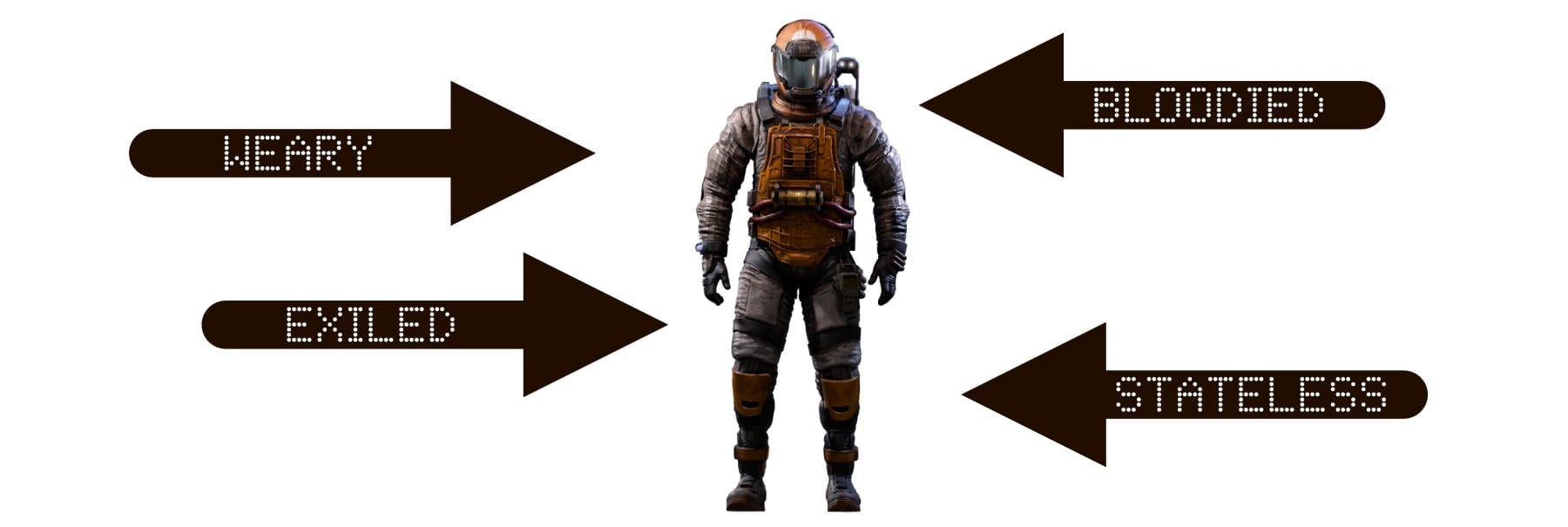
- The Viewpoint stance gives fallouts that hurt the character you’re playing – make them exhausted, injured, exiled, lost entirely.
- The World stance gives fallouts that change the environment for the worse – seal off travel, throw locations into chaos, create terrible calamities across the map.
- The Crowd stance gives fallouts that upset the broader populace – characters piss them off, they make demands, they schism off, grudges turn to violence.
- The Doom stance is deeply tied to the current crisis, and so all of its specific fallouts are Doom fallouts! Aside from that, Doom can ruin gear, make situations more dire, and outright destroy locations.
- The Historian gives the long view. Their fallouts forecast future troubles, shift how moments will be remembered, and reveal unseen issues and hidden identities.
- Finally, the Guide sits back from the fallout discussion – they don’t have any of their own, but instead act as an arbiter and referee as the group works out how things go wrong.
Pushes and Permissions
Here’s the thing about games without a single GM – their rules need to place more structure on your storytelling than traditional games, not less. Restrictions are the source of creativity, after all. All of the play stance rules I’ve described here are ways to get focused on the questions that most interest you – taking the horrors of a blank page and giving you lines to color within.
In a recent conversation with Jay Dragon (keep an eye on the RRD blog for more on that!) we talked about the challenges of writing group storytelling games. One of the things she mentioned was how hard it is to get people to cause problems for each other! In our day-to-day lives we don’t want to make other folks’ lives harder, right? But if you’re telling a story, you want conflict. You want friction, you want hardship, you want the unexpected.
That’s why play stances are framed the way they are. To play this game – especially in the high-stakes zoomed-in Viewpoint phase – you need to pick up a play stance and push its agenda. Everyone’s making an intentional choice to complicate the story in some kind of way, but also no-one has the sole duty of making life harder for the others. Even the person playing your current main character has levers to pull if they want that character to face trials. Each play stance is a set of pushes and permissions – ways it encourages you to act, and problems you have your group’s support in introducing. And if you get tired of viewing the story through that lens, simply put the play stance down. Take a beat to watch the story unfold, maybe offer suggestions and advice to the other players, maybe pick up a new stance. It’s jazz, a dance, a flowing and wild thing. It’s play.
Zooming Out
Play stances are most present in viewpoint scenes, but they have a role in the other phases too. In the scheme phase, for example, each stance has a chance to describe how your background characters have spent their time offscreen. And in speculation, where no-one’s holding any particular stances, they instead serve as reminders of what things you might wish to speculate about. When you ask a question, or answer one posed by another player, think about what the play stances would encourage you to say. Think about what stories you want to tell. Think about what stance you’d like to pick up next.
Relaxing the Stance
So: that’s the basics of how you play Children of Time RPG. To me, it’s honestly very similar to standard game’s responsibilities and flow – just disassembled, redistributed, given more guidance and intention.
There’s ten days left in the campaign! Which means two more blogs to write, I think. What would you like to hear about next? How characters grow, change, and recur from era to era? Or how I’ve fused Blades in the Dark, the Resistance Engine, and my favorite storytelling games into the actual taking-action-and-rolling dice mechanics? Come and tell us on the Kickstarter page.
Stay weird and keep evolving!
Minærva