
We Laugh In The Face Of Death
Hey, do you guys ever think about dying?
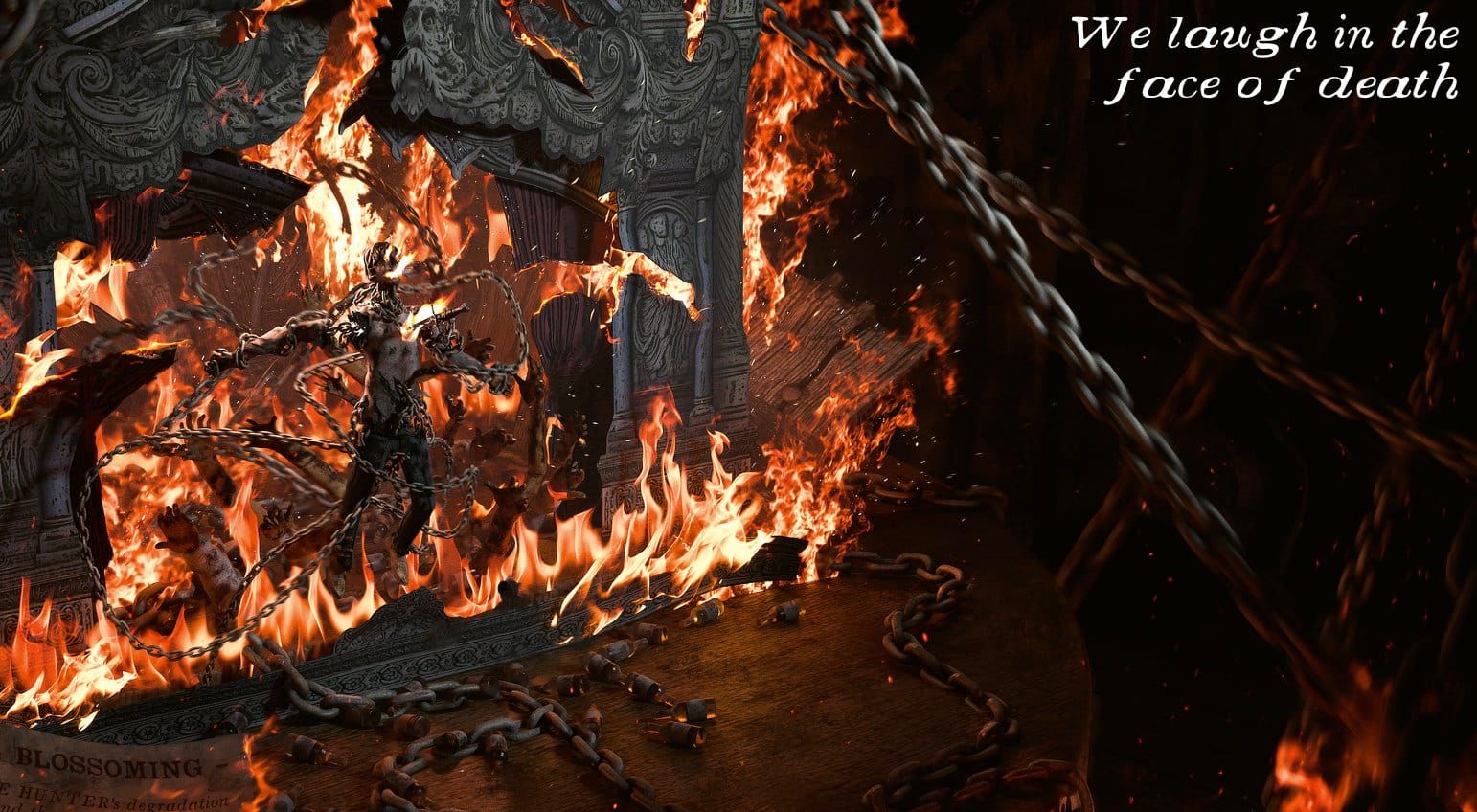
Hey. Before I hand over to Grant “Yes, That One” Howitt to talk about his game… this is an article about Hollows, our game of wretched suffering and resilience (and Weapons powered by toxic masculinity. And big monsters) in a grim Victoriana setting. If you don’t know what Hollows is, you can read about it here; if you do, and you want to try your hand at designing for it, you can join our monster game jam here. - Producer Chant
There’s a very popular Tumblr post about mushrooms, and the way that a mycelial network is so distributed and resilient that you really can’t do much to it without specialised tools and a lot of time on your hands, and the key phrase within it is:
YOU CANNOT KILL ME IN ANY WAY THAT MATTERS
We approached death in the same way when we wrote Hollows. Heart, the previous corebook that Chris and I wrote together, is similarly death-focused - but in as much as player characters are gearing up across the course of a full campaign for their elaborate, dramatic, powerful and maybe ironic death. Heart is about dying in the best way you can. Hollows is about staying grimly committed to life in the most disruptive way possible.
Corruption
We decided early on that when a Hunter died in Hollows, they’d get over it pretty quickly and return to their job of embittered monster-killing. Our inspirations - chiefly, in this case, Hunt: Showdown and Bloodborne - both have respawn mechanics that are referenced in the fiction of the games themselves, whether that’s awakening in the mists of the Hunter’s Dream or being jolted back to life with “Rise up, dead man” still ringing in your ears.
(I’ve got a soft spot for games that reference the player using a continue or a respawn or what-have-you. I remember playing the first Prince of Persia game on the PS2 - Sands of Time, maybe? - and the framing device is that the titular Prince is relaying the story of his journey to some lass he’s trying to shag, so every time you accidentally hoon yourself into a pit a voiceover kicks in and says something like “Wait, that’s not right. I must be getting confused - let me try again.” Which is charming, and it only gets ridiculous after the eighth time you’ve pushed O instead of X by mistake and broken all of your leg-bones in some wretched oubliette.)
I’m generally not in favour of video games where dying has some sort of ongoing problem attached to your character - like Dark Souls 2 for example, in which death reduced your health a bit until you bottomed out at 50%, and getting it back required expenditure of a finite resource - but I reckon it works fine in roleplaying games where dying and coming back to life is part of the cost of doing business. You want a mechanical thing attached to it, otherwise it loses impact and starts feeling like a revolving door.
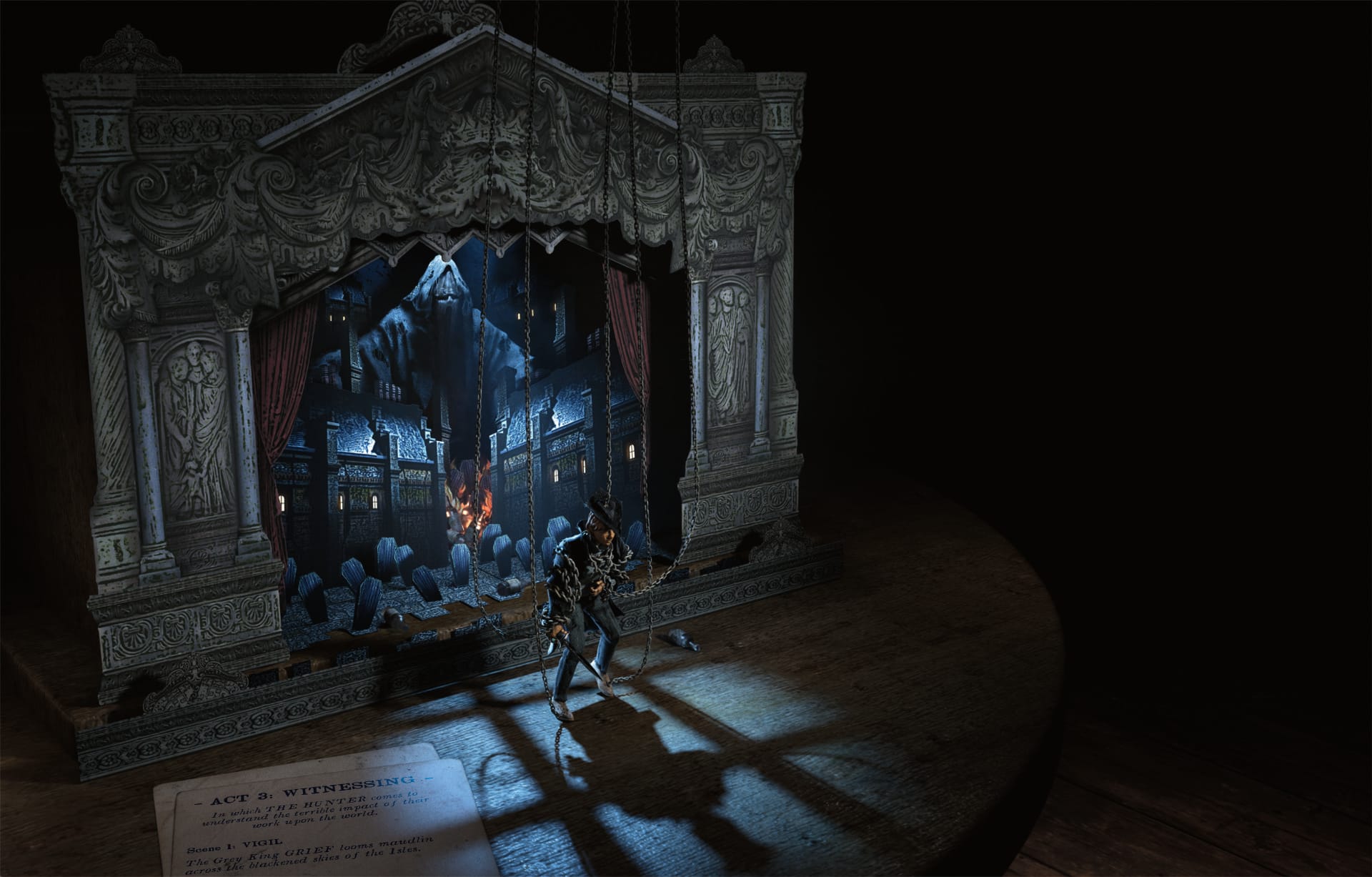
Our solution was Corruption: a measure of the toll that dying and being brought back to life (by a Malignancy? The Weapons? The Refuge? Hard to say!) takes on a Hunter’s physical form. While Corruption initially ran to 100 (and we handed it out like candy), we quickly brought it down to an effective maximum of 20, and had a cap on four mechanical effects (two positive and two negative) at any one time, to allow for balancing.
(“Balancing” as in limitation, rather than fine-tuning all the different effects to be of the same effectiveness. I quite enjoy when, in wargames, you get a soft balance mechanic where you can’t have two of the unit armed with exactly the same gear, so if you find a particularly juicy combo you can’t just keep doing it.)
Characters gain Corruption when they die - usually 1 point - and while there are a few other ways of picking it up, it’s kicking the bucket that’ll earn you most of it. Each time a Hunter gains Corruption, they get a new Echo (those mechanical effects I mentioned). Each time they die, they roll to see if they can come back to life or whether they transform into a Hollow themselves. Let’s explore both of those, shall we?
Echoes
While we’re on the subject of soft spots, I have another one for the honking great mutation tables from the old-fashioned Warhammer Realm of Chaos rulebooks. These (sometimes D1000!) lists were intended to reflect the warping effects of the great nightmare gods that held the Old World (or the Far-Future Grimdark Galaxy) in their claws and they covered everything from being granted a magical chainsword to replacing your eyes with stalks, growing centaur-style horse-legs, becoming enormously round and fat, or simply waking up one morning with a beak instead of a mouth. As you do.
They opened up a vast amount of random potential for conversions and customisation, and seeing as one way of enjoying roleplaying games - and the way that I enjoy roleplaying games most of the time - is to just read them and imagine how the different rules would interact with one another in a sort of mechanical sandbox kind of way, D1000 different daft things that can happen provides one with plenty to think about.
We didn’t quite hit D1000 potential outcomes in Hollows, mainly because we didn’t have that much space or anywhere near that many ideas, but it allowed us to insert a bit of strangeness into a game that was, at the time, looking quite normal (aside from the whole “storming personal hells with spiteful revolvers” bit). We broke down the potential Echoes into the supernatural forces that had power over you, and figured out what they could do to you if they got their way: Seed, Weapon, and Malignancy.
Seed Echoes are physical manifestations of the worst day of your life projected into whatever Hollow you’re currently plugging through; they start off fairly minor (side-effects that make other tasks more difficult), then rapidly escalate into people you really don’t want to meet insisting on a minute of your time. We’re talking the brother you killed, the version of you that would exist if you’d never fucked everything up, your judgemental schoolmaster, the last man to die in your unit, that sort of thing. Eventually they take control of the Entities in the Hollow and make them harder to fight, riding upon their backs like scarlet harbingers from a fallen biblical city.
I like Seed Echoes because they grab a player by the wrist and strong-arm them into roleplaying through something horrible; it forces their character to confront whatever they’re trying to ignore. Having your worst enemy show up and start a fight with you, even if they’re an unreal meat puppet version of the person in question, gives you a chance to say what you’d always wanted to say to them in the real world. And when they come back, still bearing the wounds of the last time you killed them, decide whether you want to say it again.
Seed Echoes are always bad and always make your life harder. Weapon Echoes have the capacity to be good for you, and it was during their development that we figured out something important: we should be rewarding people for dying. Not too much, mind, not giving them huge bonuses for throwing their lives away, but incentivising playing riskily and taking liberties with characters’ safety so combats wrapped up a bit quicker and Hunters didn’t spend the whole bloody thing wiggling in and out of Support to heal up.
So Weapon Echoes are, for the most part, beneficial. If you roll a Scar you lose a stat point, which really isn’t the end of the world, and all of the others give you something useful. It might increase the Resolve or Wound damage of your Weapon by 1, which when the average damage of something is 2 represents quite a big swing; it might unlock a surprise Tier 3 ability out of sequence, which can open up whole new avenues of tactics.
But my favourite Echoes are Malignancy Echoes, because I got to show the direct influence of these bastard parasite godlings upon the haggard bodies of the Hunters themselves. I’m a fan of injecting the setting into something that players can use (or that at least affects them); it makes it personal, and it brings it to the table instead of leaving it buried in the back of the book.
Malignancy Echoes are where we got the most Realm of Chaos with it. Hunters start mutating. Fury makes them predatory, Fear warps them into prey, Pride elongates their form and turns it unreal, Hunger distends their belly and unhinges their jaw, and Dominion and Grief both adorn them with the sort of heavy accessories they can’t take off - leaden crowns, iron blinkers, chains of woe and ragged banners.
Most of the Malignancy Echoes are bad for you. (A few are okay. Maybe you get a stat point or a special effect when you die.) But the most disruptive ones, and the ones we took the biggest swing with in terms of game design, are the Burdens which ban you from performing certain actions during your turn - everything from Reloading to Guarding to moving into certain areas of the grid. Depending on your build, these can be inconsequential or absolutely ruinous; a Shotgun bearer that can’t Reload? A Rifle user that can’t Focus? An Armoured warrior who can’t Guard? We put a couple of pressure-release valves on it: firstly, you can still perform these actions if you do it outside of your turn, so if you’re granted the ability to do it by someone else, it works just fine. (The central message of Hollows, by the way, a game expressly about toxic masculinity, is that working together makes things easier. We like our messages simple here.)
Secondly, because you can only ever have four Echoes in play at any one time, you can speed-run your eventual demise and burn through deaths in a quest to replace them with one that suits you more. We also have resources available in the Refuge that let you suppress Echoes, which doesn’t quite remove them, but stops them from being a problem for a while. I hope that Burdens don’t utterly knacker your character, but I also hope that you roll one and you have to start thinking differently about how to play for a bit.
The Last Good Death
You’re immortal in Hollows until you’re not. Each time you’re struck down in combat, you awaken in the Refuge - a sort of interdimensional flophouse - with a metaphysical headache and a grudge. But: each time you die, you roll a D20, and if it’s under your current Corruption, you become a Hollow. We refer to the final time you die in combat as The Last Good Death and the act of becoming a Hollow as Blossoming, because we work purple as fuck when it comes to this game.
That’s the end state of every Hunter (unless they’re Anchored, which is a whole thing and very costly and even then it results in you becoming a withered shadow of your former self forever bound to the Refuge, so it’s not all good) - they succumb to the Malignancy and go Hollow. Every Hollow is the psychic vestige of someone touched by a Malignancy, whether they were brutalised or themselves brutal, and once their will runs out they die and their pocket otherworld takes root alongside the real, so it’s no different for player characters.
Once you become a Hollow, it’s on you to write up your own psychodungeon and inflict it on the rest of the players. We provide a pretty thorough guide on how to do this in the book, and our Discord is an excellent source of advice from other people who’ve made their own adventures - although to call them adventures feels a little belittling - and we hope that, as a send-off to a character you’ve been playing for a while, you enjoy writing out the allegorical geography of their particular trauma. We encourage the player themselves to run the Hollow as GM - but they could probably team up with the existing GM if they’re unsure on how to do it.