
Children of Time design diary 1: Speculation
In the first of our Children of Time RPG design diary series, Minærva talks about why Children of Time is a great foundation for a TTRPG.
In the first of our Children of Time RPG design diary series, Minærva talks about why Children of Time is a great foundation for a TTRPG.
This game is a personal project for me – when I read the book in 2015, it inspired me as I wrote Legacy 2nd Edition, and when I exhibited at my first convention I sold a copy to Adrian [Tchaikovsky] by describing how it was designed to tell similar stories to his book. Years later, when Adrian asked if I’d like to adapt Children of Time into an RPG, it felt like closing a circle.
So: let’s talk about what kind of game this is, and why it’s such a good fit for the book series!
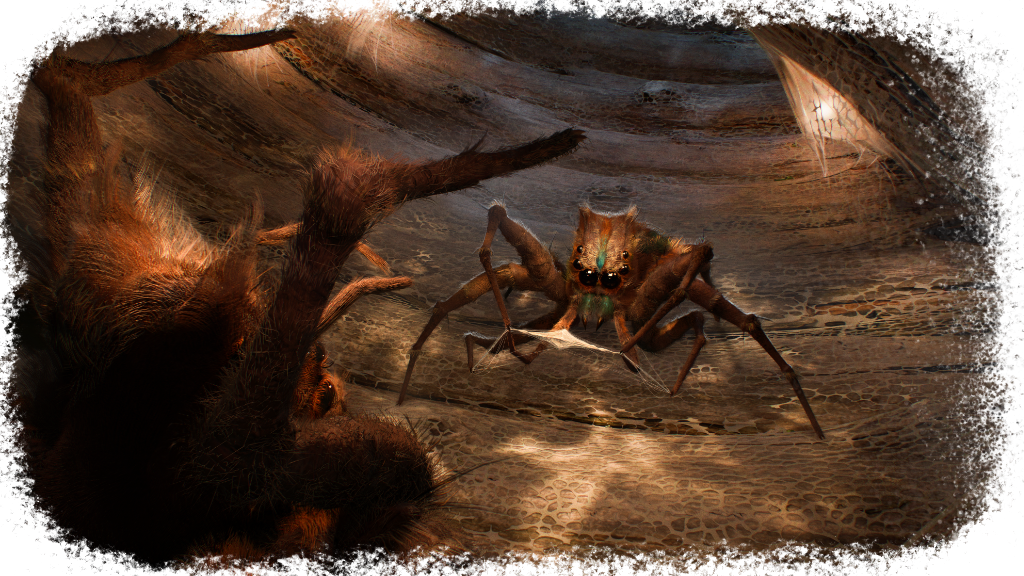
Your own personal Tchaikovsky?
I love the characters in the book and the stories, but what really makes them fun for me is the concepts. People often talk about sci-fi books having One Big Thing – FTL travel, robots, genetic engineering – that then drives the plot, but what I love about Adrian’s books is that they’re a lot more organic than that. A Big Thing is there, in the form of the uplift virus the spiders of Kern’s World benefit from, but the story flows down many threads: the culture and history that would lead society to develop such a virus, the ways that society collapses, the ways its expression is twisted by the unexpected creatures it uplifts, the uses those creatures end up finding for the virus within them.
When I started writing this game, my first goal was: how do we give each play group a mini-Adrian at their table? How do we help them tell these stories themselves? How do we make this a game about smart, wondrous speculative fiction without putting up a ‘you must have this many PhDs to play’ sign?
Can I Ask You A Question?
Our answer was to drill down into the process of speculation. The game is designed to prompt questions. Whether it’s when you’re designing your planet as terraformers, grappling with the machinery of the ark, or developing your creature’s society, the game is pushing you to ask: what does this look like? How would these people do this? How does this leave a mark?
That’s literal, too! The game flows between three main modes: viewpoint scenes, classic main-characters-taking-action; schemes, describing the background events that happened during those viewpoint scenes; and speculation, where you talk as a table about the world you’re making and the characters within it. All three of the game’s settings – terraformers, the ark ship, and the uplifted species building their society – flow between these modes. Lead characters make changes in the world, their society responds, new problems and opportunities unfold – and you the players get to decide how at every step.
The core rules for this phase are simple:
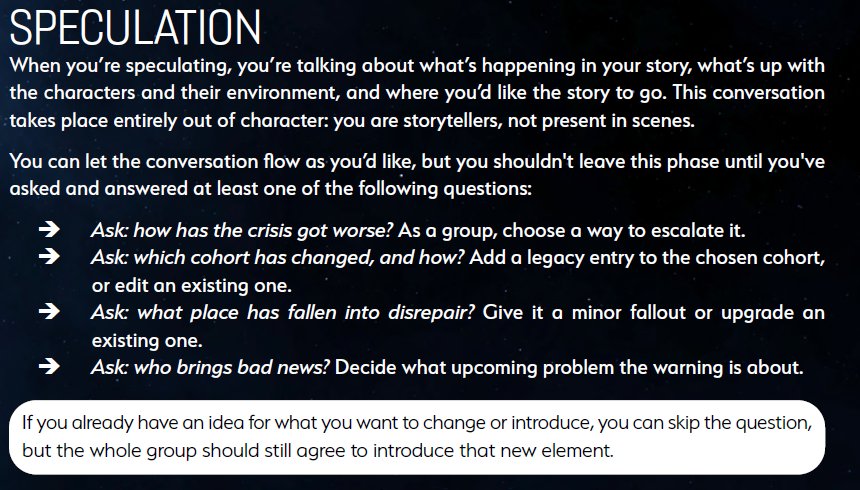
Other parts of the game can build upon or tweak this core speculation phase. Certain in-game social groups add more questions if they’re in play, as do certain story themes you might have put into play. Particular places and abilities let characters ask those questions mid-scene, and maybe gain benefits from acting on the answer – or even let characters decide the answer for themselves. But it’s always present, always working to push your group to ask questions of how, who, what, when.
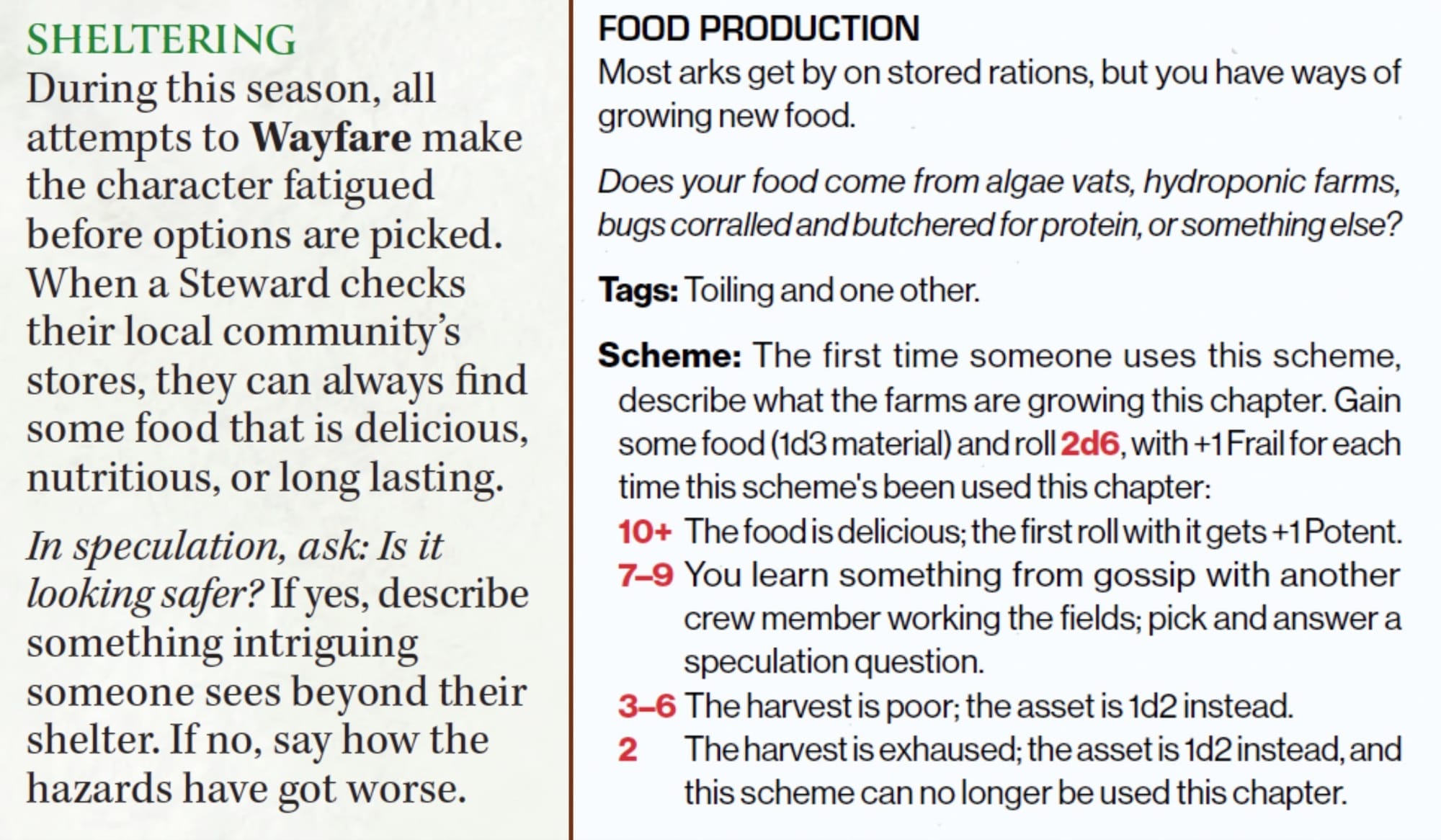
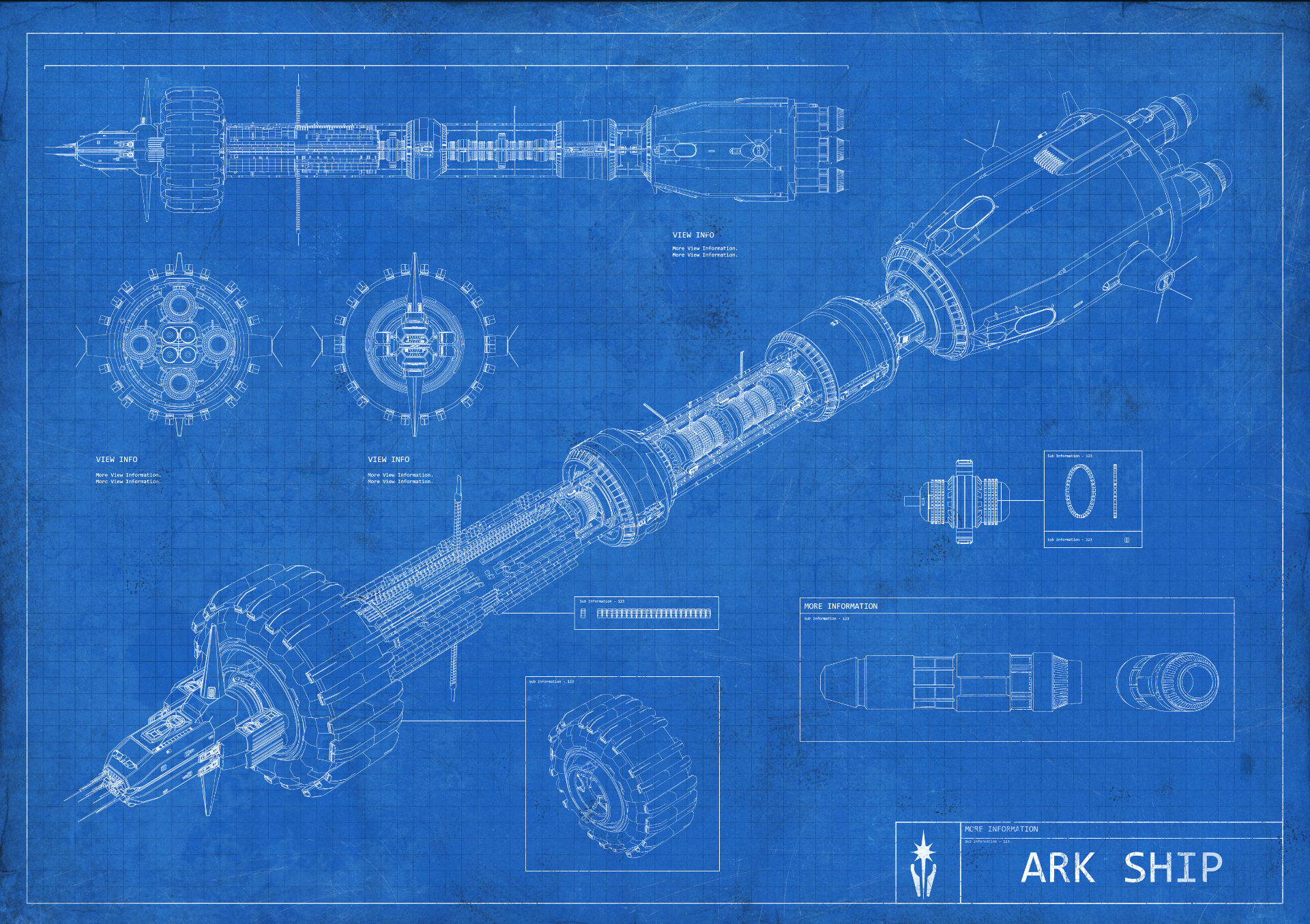
The Steward cohort of planet-based creatures gets to decide what season it currently is, and that adds a question that anyone can ask whenever you enter Speculation. On the Ark Ship, those who work in its food production bays might get to gossip with fellow workers to learn more about the crisis’ events.
This push towards speculative play runs through the game design. Every storytelling stance players adopt suggests questions to shape the tale you’re all telling. Every crisis your societies encounter starts by asking your play group vital questions about the situation and the pressures it’ll place your society under. The processes for setting up your terraformers, your ark ship, your planet of creatures are full of pointed questions, helping your group make fun and interesting and gameable situations. Even the process of starting a viewpoint scene is a matter of finding the important questions you’ll all answer together.
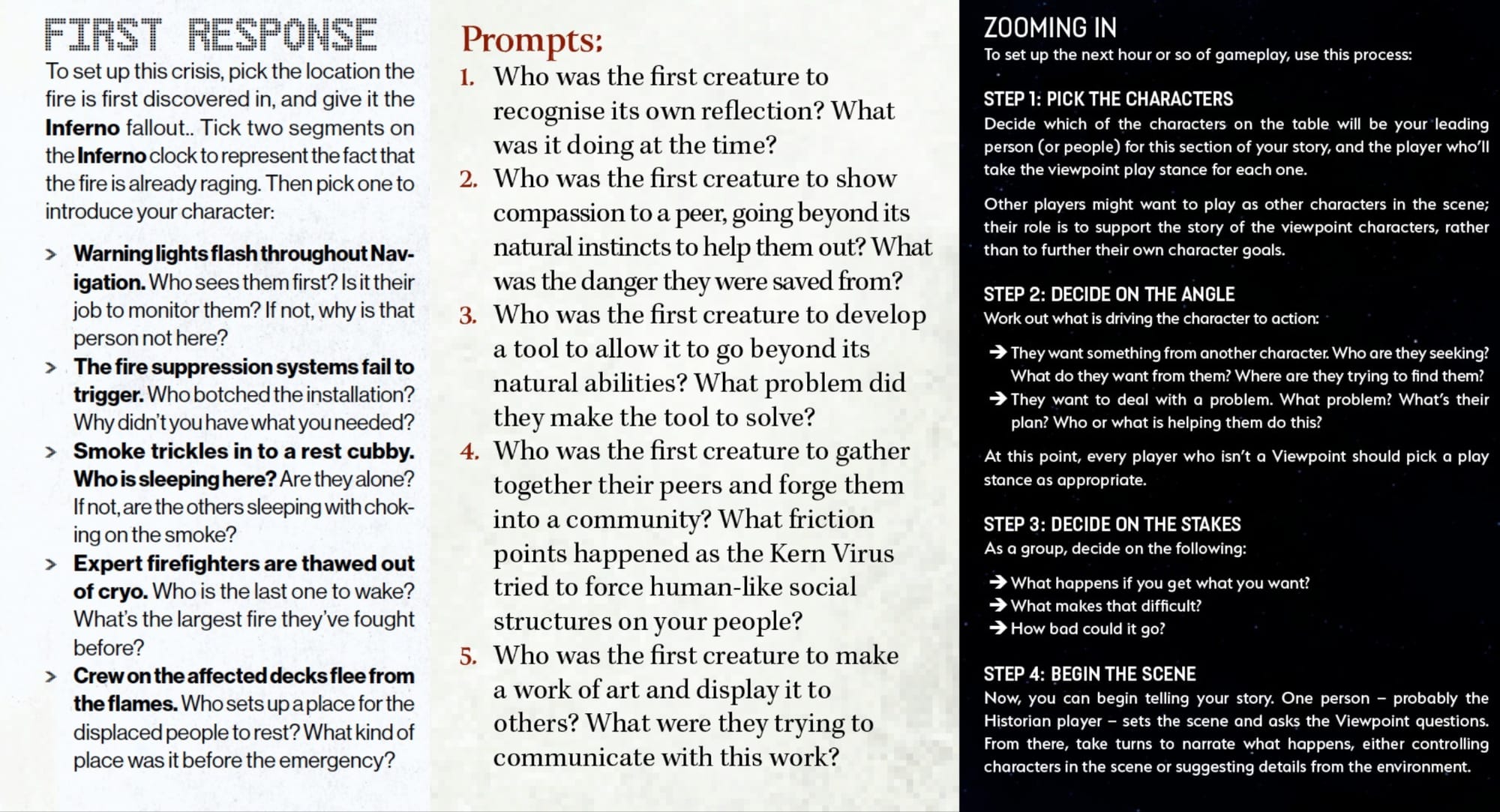
Questions from the Fire ark ship crisis, the creature uplift process, and the scene framing procedure to help your group speculate about their world and build fun situations together.
But we’re just scratching the surface. Play stances, crises, the different settings and how you build them, viewpoint scenes, and more are topics for future posts. For now, I’ll say: thanks for checking out the game, and I look forward to the worlds we’ll build together.
If you have any specific questions or areas of design you’d like me to cover in future posts, reply and let me know!
Minærva McJanda