
On the matter of the proposed importation of one (1) vampyre of the old kingdom, August 2026
We asked our erstwhile logistics person Alex to take a look at compliance with the new EU Packaging and Packaging Waste Regulations, and this is what we got instead. We trust this explains the situation and our feelings about it in full.
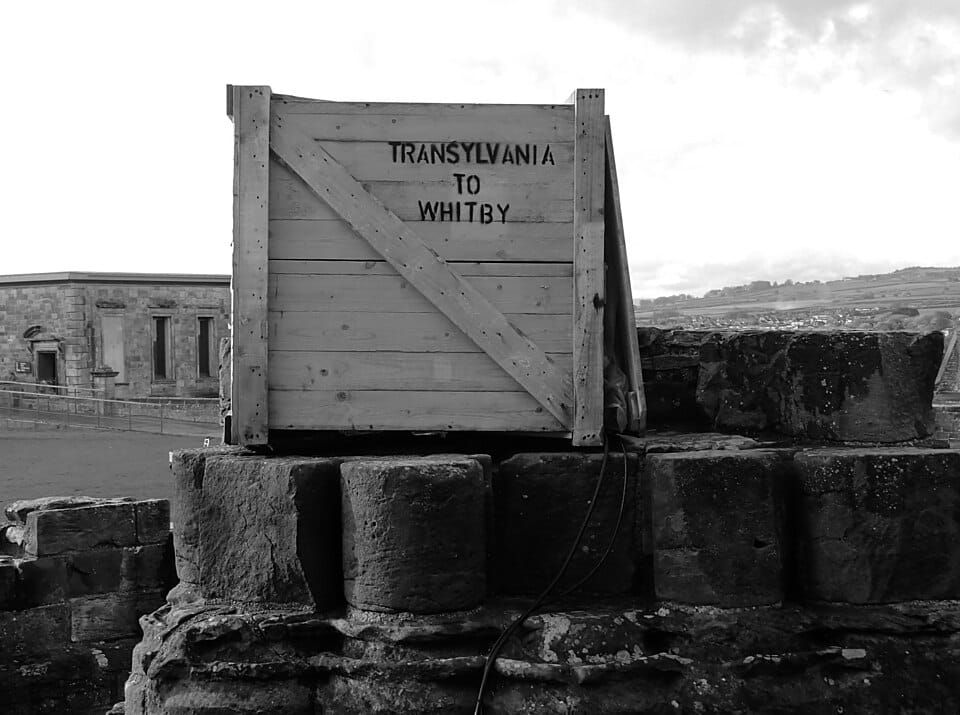
We asked our erstwhile logistics person Alex to take a look at compliance with the new EU Packaging and Packaging Waste Regulations, and this is what we got instead. We trust this explains the situation and our feelings about it in full.
Dearest Ma(z)ster.
Thank you for your most recent missive regarding matters arising in the unfolding relocation plan. I have taken steps below to answer some of your most pressing questions.
Your letter states that recent polling shows a negative swing in your net favourability among the local populus, and as a result expediting the collection date is now of the essence. If it is beneficial, I can leverage contacts at McKinsey; their track record supporting outgoing leaders to cultivate a broad and enduring public legacy post-succession is second to none.
Whilst you’ve made it clear that this is to be treated as a heritage trip, following in the footsteps of your illustrious ancestor as part of your ‘slow travel’ agenda, I caution you that many changes to the transportation industry have occurred in the past 120 years.
Let me begin by confirming your choice of destination.
You have signalled a desire to land at Whitby; a historical and evocative location, to be sure. However, since your ancestor's arrival at the end of the 20th century, there have been some major changes to the port infrastructure.
In 1896 Whitby was an obvious choice, given its primary business of unloading logging cargo from the Saint Lawrence River area of Canada, and staffing by knowledgeable local agents who understood how to look after timber-based products. Unfortunately, in the last 50 years, the lack of deep-water berths for modern container shipping means Whitby has shut these services. It is exclusively a fishing port now.
Regrettably, I have exhausted all avenues for workarounds in this area. It is impossible to land the planned cargo under fish and fishery products tariff codes, without also requiring valid catch certificates, additional paperwork under the IPAFFS system, and assessment of the BTOM risk category.
In addition, Whitby is rather a long way from London, and your onward journey would require a number of days’ rail or road transit overland at the mercy of local couriers. We have seen a sharp decline in courier services within the UK following the breakdown in the UK-EU relationship following the 2016 referendum. These shortages will add somewhat to carriage charges in the UK that you may have not considered.
Are you absolutely certain that Whitby is the best choice of port for devanning the cargo? For a London destination, I would suggest Felixstowe or Harwich ports, both on the East Anglian coast, and suitable for all possible transit routes. St Katherine’s Dock in London is sadly no longer an option, since the Thames Barrier became operational in 1982. Thamesport now focuses exclusively on short-haulage services to Rotterdam, and destinations on the Iberian Peninsula only.
Regarding the port of embarkation, I understand that duration on the water creates issues for the planned cargo. Sea freight remains the cheapest option for distance transit, but your insistence that we load the cargo at a Baltic seaport raises a few challenges. Your closest Baltic port is Gdansk, in northern Poland. This is a long overland journey from Transylvania, though not impossible given recent investment in transport infrastructure following the collapse of the USSR and subsequent national accession to the European Union.
I understand that you have trusted local agents with experience handling your cargo and knowledge of the old paths through the Carpathian mountains. Have you checked they are aware of the overland border crossing restrictions for goods and people on both Romania/Slovakia and Ukraine/Poland routes? Both are currently under heightened restrictions due to security issues in the area. You may find that the trip will have significant overland delays.
Lack of certainty over land transport will impact our ability to book passage on vessels out of Gdansk.. The port requires a minimum of 3 days notice for upload of paperwork to the console. Currently sailings to UK ports are roughly 1/weekly, depending on vessel capacity, time of year and availability of berths at the destination port. Leaving the cargo at the port for too long will incur demurrage fees for any stay longer than 3 days.
Personally, I would recommend loading at the closest port: Constanza. This is the largest port in your area, with superb access to crucial international trade routes across the Black Sea. However, it is worth mentioning that there are currently increased costs and risks attached to travelling through the Bosphorus Strait. The Istanbul canal project has not yet opened, with a target operational window around 2027, but as I'm sure you are aware from your own efforts in Wallachia, these large scale infrastructure projects have a tendency to overrun significantly. One must also account for ongoing disruptions in both the Black Sea and Eastern Mediterranean that may impact your shipping timetable.
I will continue to explore further options, at your discretion.

Regarding your intended purchase of London property, I hope that Mr Jonathan Harker, your requested lawyer, will prove useful to your needs. There are some concerns over his knowledge of the sector as he seems to be from an Exeter-based firm, and may therefore lack experience with the London market. I would have recommended someone from Foxtons, whose workplace culture and sales tactics are most closely aligned with your needs; however, I trust your wisdom in this matter. I have booked a budget flight to Cluj-Napoca immediately.
It is worth finalising the details pertaining to the crypts at Carfax Abbey when he arrives. Our initial research shows that the Burial Act of 1857 remains on the statute books. In order to purchase formerly consecrated land, you will be required to register with the Crown as a Burial Board. I was hoping that registering your foundation as the legal entity would allow me to keep operations internal to the organisation, bypassing the requirement to inform a coroner in England or Wales if the cause of death was unknown, violent or unnatural. However, as previously mentioned this would require reconsecration of the property grounds.
I now understand this is a red line for you.
I have spoken with staff at the Home Office and they have confirmed that repatriation of remains is only available for UK citizens. It is not available for overseas non-residents. So we cannot utilise the workarounds for importing recently deceased bodies. As such, we must be creative in the way that we approach this.
I'll also note that following our conversation with the Home Office. They did caveat that moving ancestors out of the country and into the United Kingdom will not help towards your citizenship requirements. I know that this was a question of yours. In fact, they warned that it may add new complications to the paperwork. I hope the property lawyer will be able to better explain the options that remain to you regarding the property portfolio. Regardless, I stand ready to deal with any of those issues as and when they arise.
On the matter of the goods themselves, paperwork requirements have increased since 1897; I’m sure these are all surmountable with a minimum of fuss. In order to organise this I will move the Goods under Ex-Works INCOTERMS as far as customs and courier companies are concerned. As I will be moving the cargo LCL, I do need to ensure we file paperwork thoroughly to avoid scrutiny from port authorities.
Unfortunately, the Shipper remains responsible for preparing the goods for export. As such I recommend instructing your pick and pack team to begin preparations immediately, with close attention paid to packaging solutions suitable for a long sea journey. Please ensure they source these from reputable sources, for reasons I will outline later in my letter.
I have a handful of questions and clarifications to ascertain before I can move forwards with the booking.
First of all, is master planning on being the Importer of Record?
If so, I will require a British registered EORI number in order to land the goods. That will need to be linked to a private company or registered entity with records at Companies House. Perhaps I can use the same foundation for the London property purchase? Or are you concerned about taxation? Please advise.
As repatriation is no longer an option, it is clear that I will need to rethink the Harmonised Tariff Codes for this transport of goods.
Following a thorough Product Taxability Assessment, reviewing the product characteristics, intended use, customer classifications, and geographic factors, for the UK market I believe there is a choice of 3 HTS codes:
- 9705 21 00 90 (human specimens and parts thereof)
- 9705 21 00 12 (human remains in parts thereof; over 200 years old)
- 4421 20 90 00 (Other wooden coffins, excluding fibreboard)
The best option will depend on various mitigating factors; to allow me to assess these in full we have a few more questions.
Firstly, is it possible to provide documentation that attests to the age of your ancestors’ bones? The UK authorities will require some proof; signed death certificates from a responsible local authority is likely to be best.
If you are unable to provide these, I can attempt import as simply “coffins”. However, wood placed on the UK market needs a Due Diligence Statement filed before customs clearance, as well as certification under the UK's Wood Regulation and Plant Health laws. On top of that, following the introduction of the UK's Producer Responsibility Obligations (Packaging and Packaging Waste) Regulations 2024, They will require shipping on heat treated crates or pallets to cover the ISP M15 compliance.
Also, the Forestry Commission would like advance notification through their electronic portal if the wood or the timber in either the coffins or the packaging materials are from species under regulated categories. I can provide a list of the endangered CITES-listed woods banned for UK import, if requested.
Fortunately, as you are a citizen of an EU member state, it's highly likely that your local agents will already have acquired the relevant information in order to comply with recent updates to the EU Deforestation-free Products legislation. Do ask your local offices for more information about changes to EU regulations; does knowledge of the old paths extend to the old forests? This might be beneficial for any future shipments.
In any case, it remains vital for me to know the value of the goods being transported. Unfortunately I cannot simply call them ‘priceless ancestral heirlooms’; I will be required to price them. Perhaps a bill of goods from the person you purchased them from, or a receipt of some kind, could help me establish the monetary value of the coffins and grave goods? Failing that we may need to engage the services of an appropriate agency; perhaps a local probate and chattel valuer springs to mind?
Like many of our most affluent customers, your suggestion that I explore other overseas markets is well made, in these times of geo-political upheaval. However, I'm afraid that Australia is simply out of the question. I cannot get the required certification for ‘the soil of the old world’. The Australian Border Force confirms that it is very much not possible to import any form of untreated soil, mud or clay. Apologies for this.
You also suggested I explore ‘the New World’, as you called it. Recent changes in the political situation there may complicate matters with American partners. We may find Canada a better option, though I understand your concerns regarding the climate.
Import processes for the USA are largely the same as with the UK, but like their approach to spelling and grammar, the Harmonized Tariff Codes are slightly but meaningfully different. The most obvious choice remains:
9705.21.00.00 (human specimens or parts thereof)
However, there have been some recent rulings by US Customs and Border Protection on this code. They may seek to reclassify you instead as Human Fecal Specimens (0519.19.40.70) ‘providing for animal products not elsewhere specified; or including Dead animals of chapter 1 or 3; unfit for human consumption; Other; other; other’.
Would this classification be an issue for you?
Either classification will bring standard landed tariffs at 1.1%, plus the current reciprocal tariffs based on Country of Origin. I understand this would be Romania (I cannot find any carve outs for the Kingdom of Transylvania, and would be wary of pushing the US Trade Envoy for further recognition at this time).
The good news is that Romania, as part of EU treaties, is covered by Most Favoured Nation status. This means the total tariff is capped at a “top-up rate” of 12.5%, meaning no item carries a greater tariff than that, regardless of the base amount, but also that items carrying a lower tariff will pay up to that total. As a result, current baseline tariff ratings have become irrelevant for assessing the most suitable import codes. Unfortunately, this remains a volatile situation, with both the rates and list of affected countries liable to change at a moment’s notice. Once I have an accurate valuation for the shipment I will of course be able to apprise you of the likely financial impact in more detail, but regrettably there is now precedent for tariffs altering even while shipments are on the water – another strong argument for filing paperwork robustly and well ahead of time.
I believe I can make a strong case for 9705 (human specimens), provided I correctly explain the intended purposes of the goods. I cannot, for example, claim that they are going to be used for lab-based experiments or for any kind of commercial activities. If I can prove they will be used for display or educational purposes, this would be ideal. Perhaps finding a US-based museum partner would help me find a US Importer of Record to further expedite the paperwork? Research suggests the Anatomy of Death museum in Michigan may be a prime candidate. However, overland transit to Michigan is likely to also present challenges given the parlous state of US railroads.
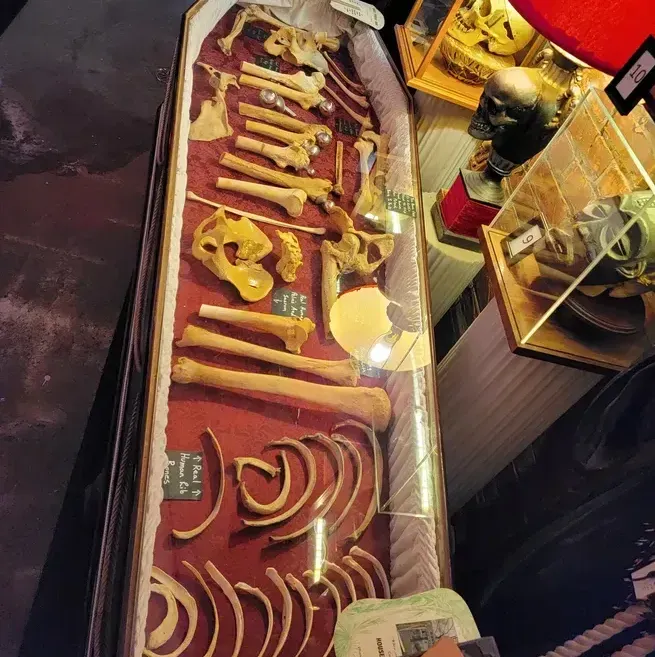
If you are unhappy with any of that, then the best way forward is:
4421.20.00.00 (coffin (other)).
I do need to caution that the United States does have the Lacey Act, which will require us to register wood in any shipments entering the country as a formal entry. Since the rescinding of de minimis exceptions last year, this now covers all entries.
I will need to know the specific wood species, and in which country the coffin wood was grown and felled. At present, I don't need to account for packaging materials, but depending on how long this takes, there are plans for legislative reform to bring pallets and packaging wood under its jurisdiction by 2028.
Don't fret if you don't know exactly where the wood for the coffins was felled. As long as I know the rough wood species (e.g Hazel), I am allowed to list all reasonable possibilities (e.g Common Hazel (Corylus avellana): British; Common Hazel (Corylus avellana): France; Turkish Hazel (Corylus colurna): Turkey, etc)
This is a legal requirement. Misreporting is liable to result in significant fines and/or imprisonment, should the United States authorities uncover fraudulent reporting, or attempts to conceal the product-type from scrutiny.
–

I think that brings me to the conclusion of outstanding items relating to your planned relocation. So, let me turn to the recent complications in the matter of your Cousin Orlok's transportation. As he has already begun his transit and is now at port, time is of the essence.
Firstly, I have a few questions about the port of destination. The Count’s handwritten note (which I must admit are rather hard to decipher from the photographs) states the destination is Visborg, which I can't find on Google Maps, or any lists of receiving ports. Context clues imply it is located in Germany. Did he perhaps mean Hamburg or another former Hanseatic city, like Lubeck? It is a little strange. I would recommend in future that the destination port is uploaded directly into the online delivery booking portal, to avoid complications of this kind.
I'm also confused as to why he has requested travel via boat at all. The road routes from Transylvania to Gdansk are almost the same distance as to Northwestern Germany, especially with the Autobahn network. Did he perhaps mean Visborg on the Swedish island of Visby? An island destination would make the sea voyage out of Gdansk much more understandable.
If this is the case, the good news is that Intra-EU transportation (i.e. Romania to Sweden) requires no import or export paperwork. There will be no duties, but I will still require CN codes (4421 20 90: Other wooden coffins (solid wood like oak, pine, or poplar) or 9819 / 9919 codes if I have to keep the body inside), plus the standard Intra-EU documentation; CLP, Commercial Invoice; Packing list; CMR; REACH declaration and of course, the MDF certificate to prove that the coffin wood is not made from medium density fibreboard. That's fairly simple standard paperwork for a movement of this type; I’m sure I can work through it in no time if I put my mind to the task.
Time is of the essence. There are a few new legislations coming into force: Deforestation legislation is due an update, and of course one must now contend with the Packaging and Packaging Waste Regulations that came into force this week.
Perhaps I have misinterpreted the Count’s handwriting, and he also wishes to travel to Whitby?
Post-Brexit, this will open us up to import/export issues.
As you will remember, I had different issues with transporting the Count, namely the lack of death or birth certificates.
This has meant I cannot move him as a human body or as human remains. I am still struggling to work out exactly what HTS code to use, given his stated demand to be carried within the coffin at all times.
Overland transport to the port was a little quicker than expected, and as a result of surprise demurrage at the dockside, stevedore damage to the crates has uncovered new issues. Needless to say, I have already processed the First Notice of Intent to Claim paperwork.

At the time of packaging, our agents were not informed the crates contained live rats. This discovery unlocks phytosanitary regulations regarding the import of live animals. The rats themselves may need passports and/or a veterinary examination before loading can continue. I will also need to pre-register the import with UK authorities under IPAFFS.
If I don't have a health certificate for them, then I may also need an import licence in the UK, or some form of commercial documentation to show that I understand the risks and remain liable for any issues that occur during the quarantine process.
Can you confirm, are the rats for lab testing purposes?
If so, import duty and VAT can be deferable, otherwise I will have to pay it at the moment of import, in the Count's case. Does the Count have a Duty Deferment Account? If not I can of course arrange for him to use ours, but obtaining the necessary signatures from him while at the port may be logistically challenging.
The USA may actually be a better destination for him, as they don’t currently have any rules for importing pet rodents, but I would need to check further to find out if 5,000 rats is above the threshold for registered pets.
I will note that even when your illustrious ancestor undertook his relocation there were restrictions on “infected cattle, sheep or other animals, all the carcasses thereof; hide, skins horns, hoofs, and any other part of cattle or other animals, which the privy Council may by prohibiting order prevent the dissemination of any contagious distemper”.
This legislation remains in force and has only been strengthened by Acts of Parliament in the intervening years.
I will also have to be particularly careful about the crates of ‘black soil of the Old World’. I have been informed by dockside inspectors and medical professionals that Count Orlok’s crates contain evidence of remains showing clear signs they died from the Black Death. This raises potential challenges to overcome before I can move forwards with loading. Meanwhile, wharfage fees continue to rack up.
As part of the ‘rats and soil cargo debacle’ our agents have uncovered what appears to be an ancient copy of the book Vampyres, Ghostly Spirits, Wytchcraft and the Seven Deadly Sins. Do you have proof of age paperwork for this? Preferably from a recognised body like the British Antique Dealers’ Association (BADA)? We will need this to assess if this is a Chapter 97 for antiques or Chapter 49 for printed books, which would render it tariff-free if bound for the USA under 50 U.S.C. § 1702(b); perhaps some small solace given the overall situation.
–
Regardless of the circumstances, thank you for choosing me as your broker in these matters. I will continue to deliver answers to your many challenging questions, even if it drives me mad.
I look forward to welcoming you as soon as feasibly possible to our glorious shores here in the United Kingdom. You will find the wealth concierge services in London to be the very best in the world, with decades of experience handling the every whim of ultra-wealthy Slavs in what has become known as St Petersburg-on-Thames. I'm sure you’ll settle right in.
As always, your loyal and obedient servant in all matters,
Alex Renfield